Thursday, July 12, 2012

Intern Graduation


On Monday Tino and I graduated from the internship program. I can't believe it's almost time for me to go home; these last few months have gone by so fast!
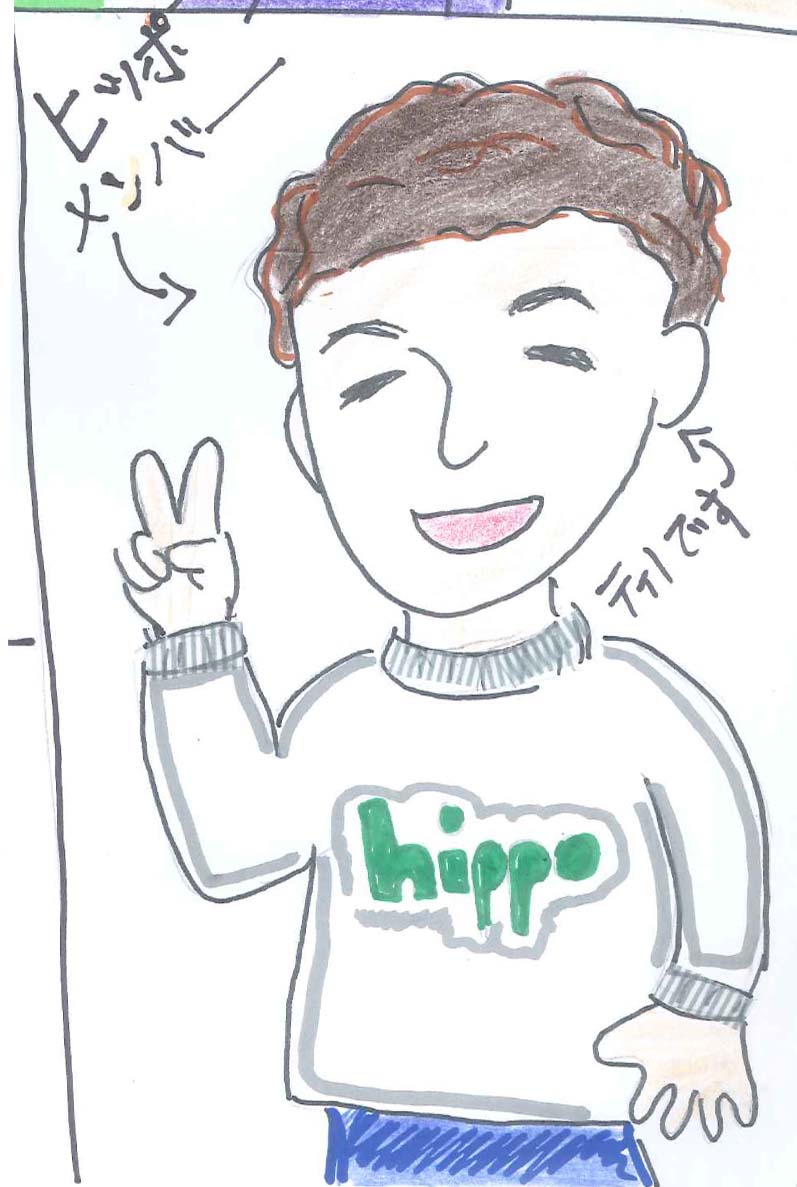
Tino and I wearing Japanese Kimono and Yukata.
For our graduation, we had a ceremony at the LEX headquarters and all our host families and lots of Hippo friends and staff attended. We both talked about our experiences this year in Japan, our time with our host families and friends, Hippo, and our learning process and discoveries in Japanese. I also shared a little bit about my cultural project, which was Japanese ceramics. We both talked for about 40 minutes, all in Japanese!
Part of my presentation about the pottery I made in Japan
as part of my cultural project.
When I first arrived llast year in September and had to introduce myself at a Hippo's 30th Anniversary event, I was was nervous because I couldn't speak Japanese at all and practiced over and over in order to be able to say,"Konnichiwa, watashi-no namae-wa Stephanie-desu. Yoroshiku-onegaishimasu."

At that time it seemed impossible that I would eventually be able to give a presentation like this in front of a large group of people completely in Japanese, but now that first introduction I learned is like second nature to me, and it's no problem at all to talk for 40 minutes straight.

This wasn't the first time I have spoken about my experiences in Japanese at events or in groups; I have been doing it little by little all year and as learned more and more Japanese and became more comfortable I was able to say more. Of course, my Japanese is not perfect, but looking back at where I was 10 months ago when I arrived in Japan, I am so amazed at what I am able to understand and communicate now!

At the end of my presentation I read a letter that my friend Sachi gave to me a few months ago that I absolutely love and I think also sums up the Hippo philosophy and environment very well.. Sachi is 7 years old. The letter, which was in Japanese of course and written on a bright pink piece of origami paper, went something like this:

"To Stephanie, (pretty!)

You are an American, but your Japanese is fluent 
                                    (you can speak really well)
but sometimes you make mistakes, 
but it's okay, 
mistakes are okay too.


From Sachi"

I have been really busy in the last few weeks finishing last projects in the office before I leave, and getting ready to go to Korea on Saturday! I will be there for a few days to help with the orientation for the group that is going to Wisconsin this summer and stay with a host family for a short time, then back to Japan for a few more days and then it will be time for me to go home. 

I will miss Japan very much and all the wonderful families and friends I have made here but I am sure we will keep in touch and someday I will see many of them again, maybe in Japan or America or in some other part of the world. I have learned a lot this year and had many amazing experiences thanks to all of you. I will never forget the time I have spent here and I will always keep you in my heart.

Thank you so much to LEX for providing me with the opportunity to come to Japan and to all my host families and everyone I have met who has helped and supported me throughout the year!

本当にありがとうございます!


With my three host families, sharing their impressions and favorite memories 
of my time with them. They all said such nice things! I will miss them!
Everyone with LEX founder, Mr. Sakakibara、after we
received our certificates of program completion.
すーちゃん

Thoughts on the Underlying Structure of Language


I have been busy in the last few weeks working on checking and editing the English translation of a book by LEX, that they are planning to publish in English in the coming year.

This type of checking takes a lot of time, as a group of 5 or 6 people meet and read through the entire document line by line, checking the original Japanese against the translation to make sure the meaning that is conveyed in the translated version is as close as possible to the original. Some times a question about one line can lead to a half-hour discussion about the meaning or connotations of words or phrases in the different languages and the larger ideas that surround the sentence. Even though it takes a long time, I think it's really interesting work because it makes you think a lot about the subtleties of language. A lot of times there are words or phrases that cannot be directly translated or even that express ideas that don't really exist in the other language, so it's a challenge to figure out how to express that idea in the other language in a way that will make sense to speakers of that language, while remaining as close as possible to the original.

In the last few meetings we had some interesting discussions about the ideas of Mr. Sakakibara and the TCL students regarding writing systems, and I read a little more from some of the other LEX publications on this topic.

One of the things that I find interesting is the Hippo Letter System, created by LEX, which uses a mix of kanji (Chinese characters) and the phonetic alphabets of different languages to write in that language. For example, the sentence:

"My family members are my dad, my mom, and I."

would look like,

"My 家族 members are my 父、母、and 私."

using the Hippo Letter system. The ideas is that if you learn the meaning of these kanji characters, you can then read them in any language. So you would read the second sentence aloud in the same way that you would read the first one, and you could write it in Spanish using the same characters, "Los miembros de mi 家族 son mi 父、mi 母、y 私." 

I've been thinking a lot about this as I have been learning to read Japanese, which uses kanji and the phonetic hiragana and katakana alphabets, and thinking about how this writing/reading system works. One of the ideas I keep coming back to is that languages which use a phonetic writing system like English aren't really that different, in terms of how we comprehend them, as languages which use ideographic characters like Japanese.

A passage from The Hippo Letter System, in a section describing the efficiency of kanji and kana in the Japanese language, reads,

"In Europe there is something called the fast reading program. Readers are taught to grasp words spelled out in phonetic symbols as whole shapes - in other words, as ideograms. People who read fast do so by subconsciously converting phonetic symbols to ideograms. This would again seem to indicate that a writing system combining ideographic symbols with phonetic symbols best fits the makeup of the human consciousness."

I think the idea that words constructed from phonetic symbols can be understood as ideograms is a great point, but I would argue that it is not limited simply to "fast reading programs" in Europe. I think this is the way that all literate adults read text in languages that use phonetic writing systems, just as they would text written in ideograms.

When young children are learning to read English they are at begin by slowly pronouncing each letter in a word and often mispronounce the word as a whole, because the sound of the word corresponds to the total combination of letters that make up that word, which is many times different than how it would be pronounced if one were to try to speak the sounds of each individual letter in sequence. But adults don't do this; most people can actually read faster than they can speak aloud. This is because we recognize the word as a whole, and can understand the meaning of a combination of letters almost instantly when we see it, rather than reading each individual phonetic letter in sequence each time we see it. If you think about it in this way, that words spelled phonetically function a lot like kanji in terms of how we recognize and understand them.

Furhter poorf taht our brians reocginze a wrod as a whole shpae and not by the individaul prats is that eevn if you mix up the lettres in the wrods of a sentnece, as lnog as you keep the frist and lsat lettres the smae (to maintian the shpae of the wrod), you can undrestnad it wihtuot mcuh diffcuilty.

The spaces that separate words in English allow them to be easily recognized by their shape.

itismuchhardertoreadenglishifthesentencehasnospacesorotherchangestoindicatethe breaksbetweeneachgroupoflettersthatmakeupaword

(It is much harder to read English if the sentence has no spaces or other changes to indicate the breaks between each group of letters that make up a word.)

In the Japanese language there are no spaces, which at first seemed to me that this would make it very difficult to read, but once I learned more I realized it's not a problem at all because the text alternates between kanji and the words written in phonetic hiragana and katakana (used for foreign words) characters. The contrast between the different letter systems effectively allows the brain to quickly recognize which group of characters makes up each word.

For example, in Japanese the sentence "My name is Stephanie," looks like this:

私の名前はステファ二-です。

If you are familiar with the Japanese letter systems, you can easily see that each alternating word uses a different letter system.

私          の          名前          は        ステファ二-     です。

kanji     hiragana      kanji       hiragana     katakana       hiragana 

(me)  (belonging to) (name)  (subject marker)  (Stephanie)      (is)

When I was studying design in school, we discussed how contrast in building materials, patterns, color, etc. can create the sense of a separation of space in a given area, even if there is no actual barrier constructed. This is because the brain easily recognizes and registers a contrasting unit as separate from what surrounds it. 

You could apply this system of contrast (changes in the types of characters used) to English as well.

IFyouWRITEaSENTENCEinENGLISHlikeTHIS,itISmuchEASIERtoUNDERSTANDbecause THEalternationBETWEENuppercaseANDlowercaseLETTERSallowsYOUtoMOREeasily DISTINGUISHwhichGROUPofLETTERScompriseAword.

And Japanese that is written all in hiragana for young children who cannot yet read kanji is written very much like English; the words written in hiragana are separated by spaces.

So in both cases (and perhaps in all languages), the writing system contains a way for the brain to easily recognize and distinguish between the units that contain meaning (words), and the brain is able to do this very quickly. I think this is what Mr. Sakakibara was talking about when he said that all languages have the same underlying basic structure.


すーちゃん

Tuesday, June 19, 2012

Les voy a 話 una 物語, 僕 historia con Hippo

Yo estoy en Hippo desde hace 2 años, les voy a decir como llegue a Hippo.
Hace varios años que tengo una amiga, que se llama Lupita, Lupita estudio japones en la universidad, asi que ella sabe mucho de este idioma. Un dia Lupita me mando una carta pero yo no pude leerla toda, pues parte de esta carta estaba escrita en japones, entonces Lupita me animo a que estudiara japones en una escuela (para ser sincero a mi eso de estudiar no me gusta tanto), en ese entonces tenia algo de tiempo libre, asi que me inscribi en una escuela de idiomas a estudiar japones y aunque entre con mucho animo, desde la primera clase senti que estaba perdido en el espacio, me parecio tan dificil y ademas lo que mas me desanimo es que no era para nada divertido, es mas era tedioso, asi que permaneci en esta escuela por 4 o 5 clases mas y fue todo, decidi no continuar con ese martirio. No quiero decir que fue inutil, de hecho aprendi a decir "arigato" y "watachi no namae wa Constantino desu, hayimemachite" ha y "sayoonara" que fue lo que le dije el ultimo dia a mi profesora.
Tiempo despues me encontre con un volante de Club Familiar Hippo, anunciando una conferencia de la Dra. en lingüistica, Suzanne Flynn (profesora del MIT de Boston), pero lo que realmente me llamo la atencion de ese volante es que estaba escrita la frase "Todos podemos hablar 7 idiomas", me parecio interesante, pero al mismo tiempo pense: " si con un idioma no pude, ahora con 7, imposible" pero me decidi y fui a la conferencia, el tema fue "El multilingüismo y la adquisicion natural de idiomas" si mal no recuerdo.
Por supuesto que fue interesante escuchar la conferencia, pero lo que me sorprendio fue ver a japoneses hablando muy bien español y escuchar a los socios de Hippo pronunciar palabras en muchos idiomas, cuando me acerque para pedir informacion supe que no era escuela y que nadie estudiaba idiomas, todo lo habian aprendido naturalmente con el metodo de Hippo, por supuesto me impresione y quieria saber como era ese metodo, asi que quede en ir a ver una sesion de Hippo.
 Unas semanas despues fui a un "open" es decir participe en una de las actividades semanales de Hippo, y para ser sincero todo me parecio tan raro y un poco vergonzoso, ver bailando a todos canciones en no se que idioma y jugando juegos de niños, ademas me parecia un desorden que todos estuvieran repitiendo idiomas sin saber su significado, "esto es tan diferente" pense, ahora si que como dice el CD de Hippo "nunca habia visto..." nada igual.  Y si, era muy raro pero hubo algo que me convencio a yo tambien unirme a ese club tan raro, y eso fue que todos se veian tan contentos, divirtiendose, adultos, jovenes y niños todos juntos, familias enteras disfrutando y adquiriendo idiomas, se veian como una gran familia, "¿No es eso genial?" pense, un lugar donde puedes estar compartiendo tanto con personas de cualquier edad.
Si le damos tantas oportunidades a las escuelas de idiomas y pagamos tanto dinero por aprender, por que no darle oportunidad a algo nuevo, ¿que puedo perder?
Y asi fue como me decidi a darle una oportunidad a Club Familiar Hippo, pero la verdad es que fue Club Familiar Hippo quien durante todo este tiempo me ha brindado unicas y grandes oportunidades.
Porsupuesto, no solo a mi, culaquiera que crea que poder es querer, puede vivir experiencias como la mia. Despues de todo Hippo es para todos!.

てぃの。

Tino.

Thursday, April 12, 2012

The Month of March & How to Count Rabbits in 日本語

Wow, it's already April, which means March came and went so quickly! In case anyone is wondering what kinds of things the interns have been up to, here is a copy of my monthly report (and a translation in English) with a brief overview of what I've been doing recently:
 

This month I've attended lots of Hippo events (workshops, group sharing sessions, international learning classes at elementary schools, orientation camps for future exchange students, etc.) At one of the workshops I was one of the main speakers and gave a 15 minute presentation about my experience traveling internationally and working with 4-H and LEX, all in Japanese! My host mom helped me a lot to prepare and practice beforehand, which made me feel a lot more confident :)

The photo is from one of the international learning classes I attended with a group of 3rd and 4th graders. It was a change from how the classes usually go, where we as the coordinators give presentations about different cultures and lead games with the kids. This time the students prepared
presentations on their own Japanese culture and taught us about things like Japanese food, geography, games, and school. I think it was really great! They were really cute too and gave me all kinds of little origami presents.

We also had the second yearlong student midterm meeting at the office, and I have started meeting with some of the students who will go abroad this coming year as yearlong exchange students to give them a chance to practice English. The formal English interviews are pretty nerve wracking, so this is another chance to practice English in a relaxed environment. A lot of them are pretty shy, so I'm trying to come up with new games or other things we can do to get everyone talking and not feeling nervous.

My host family is really great and a lot of fun and we talk all the time about all kinds of things, so my Japanese has been improving a lot! My host sister Kano-chan is 11 but a lot of the time she acts like my big sister because she looks out for me and shows me the correct way to do things, like when to bow or how to say something more correctly in Japanese; she's really cute, and it's actually really helpful! The other day she taught me all about an important part of Japanese culture: the Japanese boy band Arashi! Kano-chan loves them and they are really popular right now. I can now proudly say I know all the band members' names and favorite colors. You never know when this might be an important thing to know...

My favorite new thing I've learned in Japanese is how to count rabbits. In the Japanese language, there are different endings for counting depending on what kind of object you are referring to. For example if you are counting thin, long objects, flat objects, mechanical devices, large animals, small animals, mirrors, hanging scrolls, words, umbrellas, or houses, they will all have a different ending that marks the number.  Normally for small animals, the ending -piki is used but rabbits happen to have a differend ending -ha, which is the ending used for birds or things with wings, because apparently rabbit's ears are so big and floppy they are considered to be just like wings!!!

Mi papa de México en Japón!

This last week was exciting because I got to see Javier, my host dad from Mexico again! He's one of the coordinators of LEX México so he came to Tokyo last week for work and vacation, and it was really nice to see him!

Almost two years ago, I went to México as an LEX intern for 3 months, and stayed with Javier's family in Mexico City. It was a great experience, and one of the main reasons I decided to apply for the LEX internship in Japan. I did a lot of the same things as an intern in Mexico as I do here in the office like help check documents and work with the exchange groups, and of course had the opportunity to live and work in an environment where I was always surrounded by and communicating in Spanish, which allowed my abilities and confidence in the language to improve more than I had ever expected! Though my experiences as an LEX intern in Mexico and Japan have been different in some aspects, one of the things that has always been the same is the people. All the LEX members I have met in both Mexico and Japan have corazones grandes y abiertos. They are welcoming, open, caring, and fun. Thank you again to everyone from LEX Mexico for welcoming me and creating such a positive experience! And thank you to LEX Japan for making it possible to continue my connection with LEX and have a whole new experience here!


2012 with other Hippo members in Tokyo

2010 with my host family in Mexico City
I'm always amazed by how many connections exist and are strongly maintained across the world through LEX. I've gotten to see so many people in Japan who I've met before in Wisconsin or Mexico through the LEX/4-H exchanges and I'm always meeting new people who I find out are like brothers or sisters because we stayed with the same host families or have connections with the same people. 嬉しい!

Thursday, February 16, 2012

Writing in 日本語

Every month the Hippo interns and exchange students write a report sharing about their experiences that month with other Hippo members. This month I decided to challenge myself to write it all in Japanese. It took me two full days to complete, and I'm sure it's far from perfect, but I did it! And what's more, everyone could understand it. :)


A lot of the time I still feel really lost during conversations or presentations in Japanese and I feel like there is so much I can't understand or communicate, but when I look at what I'm able to write four months after arriving in Japan without every having studied the language at all, I realize that I have learned a lot! 

Being able to read and write in Japanese is like unlocking a secret code, which is pretty much how it feels like as I'm trying to figure out what different characters mean and how they go together. It also helps me to understand a lot about grammar and the way that sentences and words are put together, which helps me to be able to better understand and communicate in spoken Japanese as well. For example, the Japanese word "ee-tah" can have three different meanings based on the context. I learned one of them, "went", and always thought that when people said this in conversation they were saying "so and so went", but this same sound can also mean "was" or "were" (referring to people) and "said". When I realized that they are different words, which look different when written, and Sakkun explained to me, it made conversations make a lot more sense, since to have been somewhere, said something, and gone somewhere are very different things.

Being able to understand written symbols also helps to understand the makeup and meaning of words. Just like knowing Latin roots can sometimes help you be able to figure out the meaning of an unfamiliar word in English, being able to understand the kanji and hiragana of Japanese allows me to understand new words in Japanese. For example I learned that the word "otokonoko" means child, but it was really hard for me to remember how to say this, since I would get confused as to the order of the consonant/vowel pairs which all end in "o". "O-to-ko-no-ko" and "o-ko-no-to-ko" sounded the same to me. But when I realized that "otoko-no-ko", which actually means boy, is written as 男の子, it finally made sense to me. 男 means man and is pronounced "otoko". の, pronounced "no", is suffix which means belonging to, -ese, type. And 子 "ko" means child. So 男の子 means man type child. 女 is the kanji for woman, pronounced "onna". So can you guess how to say girl (those who don't already speak Japanese)? 女の子 "onna-no-ko", woman type child. Very good!

Stephanie (すーちゃん)

Wednesday, February 15, 2012

亲爱的Hippo的兄弟姐妹们!你们好吗?!

Hola todos!!!
 大家好!我是索宁:-)

在这里我献给大家拜个年!
祝大家2012年龙年大吉
 
一帆风顺、二龙腾飞、
三羊开泰、四季平安、
五福临门、六六大顺、
七星高照、八方来财、
九九同心、十全十美、
百事亨通、千事吉祥、
万事如意  亿心同福!

我现在搬到了新的接待家庭之中,有了新的妹妹和弟弟:)
每一天都十分的开心.在今年的2月份刚开始的时候,回到了我的老家长春,在这里见到了很多很多的朋友和亲戚。
请大家时刻关注这里的动态!!我爱你们!!